

SELF-INFUSE HIZENTRA
WITH CONFIDENCE
Administration Support
In-home training for patients
With in-home nurse support, a trained nurse comes to patients’ homes to make sure they’re comfortable self-infusing. Patients can virtually connect to nursing support any time they have questions throughout treatment.

Prefilled syringes support the self-infusion process1,2
Hizentra is the only SCIg prefilled syringe approved for in-home self-administration
Compared with vials, prefilled syringes may2:
- Shorten preparation time
- In certain sizes, be directly compatible with common infusion pumps*
- All sizes can be transferred to a pump syringe using a syringe-to-syringe transfer device
- Reduce waste
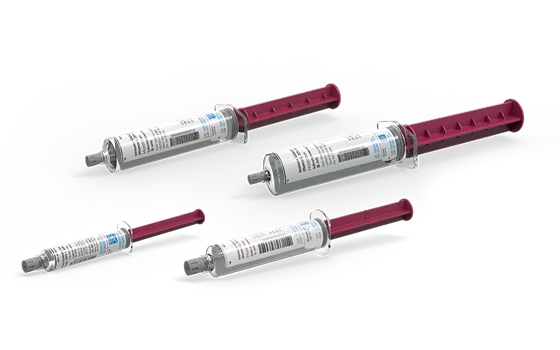
*Adapter may be required.
INFUSION SITES
Administering Hizentra therapy
Hizentra can be administered weekly for CIDP in 1 or 2 sessions over 1 or 2 consecutive days, using an infusion pump and relatively small needle(s)3
Up to 8 sites simultaneously per infusion (In the PATH study, patients generally used 4 sites per infusion)
- More than 1 infusion device can be used. Infusion sites should be at least 2 inches apart. Change the actual site of infusion with each administration
Smaller needles than IVIg3,4
- Subcutaneous needles are smaller than IV needles. Depending on a patient’s size and weight, a needle as short as 4 mm or as long as 14 mm can be used.† Commonly used needle sizes in adults are 9 mm and 12 mm
Recommended Infusion Sites
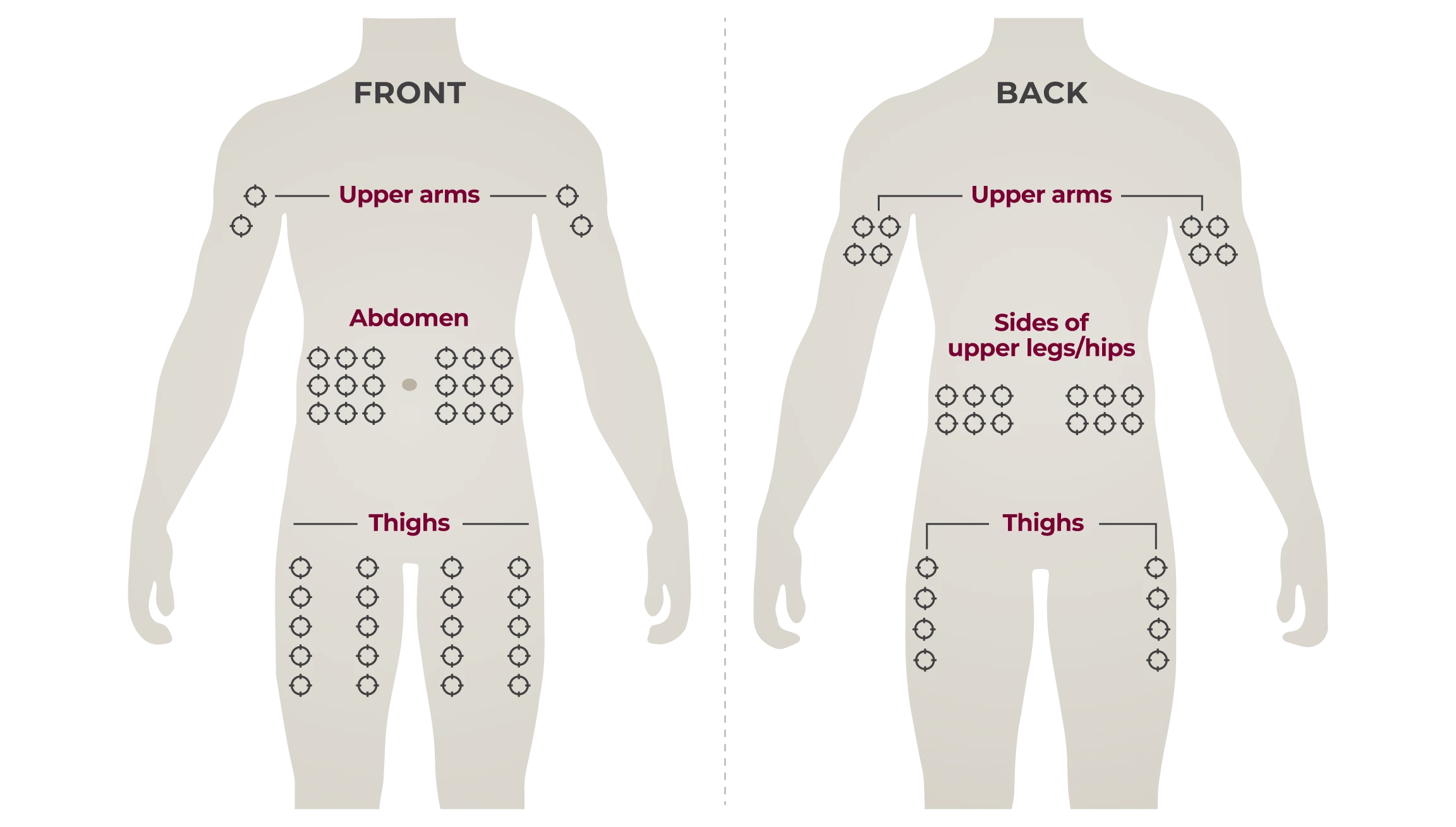
†It’s important to choose an infusion needle long enough to reach the subcutaneous tissue.
Additional ways to optimize the infusion experience
With Hizentra, there are many ways to meet your patients’ clinical needs and personal preferences.
Supplies
- You and your patients can customize their needles and rate-control tubing to optimize their experience3,4
Comfort
- Multiple needle lengths are available to ensure comfort in different infusion sites3,4
- You and your patients can also adjust the number of infusion sites used based on their comfort level1
Speed
- Infusion duration can be customized by adjusting the number of infusion sites and/or the flow rate
- Up to 8 infusion sites can be used simultaneously, with at least 2 inches between sites‡
‡For the first infusion of Hizentra, do not exceed a volume of 20 mL/site or a flow rate of 20 mL/h/site per site. For subsequent infusions, the volume per site and flow rate may be increased to 50 mL/site and 50 mL/h/site per hour per site, respectively, as tolerated.
Infusion videos
See how self-administration with prefilled syringes can support patients’ independence1,2

How to Self-Infuse Hizentra
This video will take you step by step through the self-infusion process.
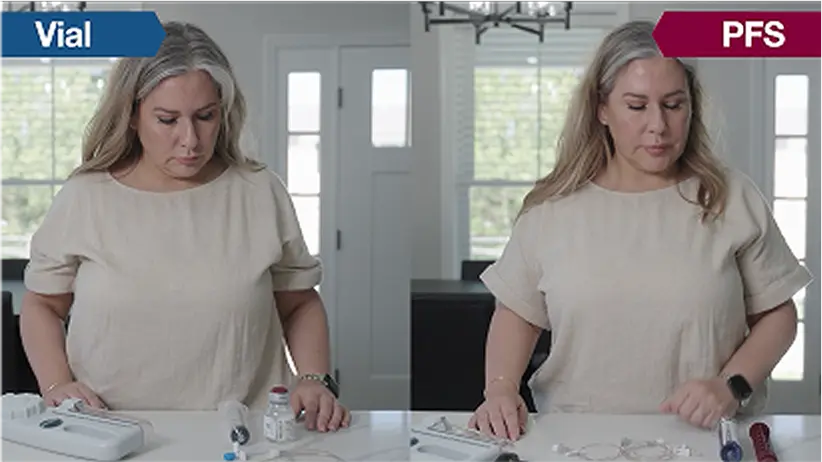
Preparation: Vials vs Prefilled Syringes
See the simplicity of prefilled syringes vs vials.

“Hizentra has made a difference for me. It has given me the flexibility to know that I can take care of myself. That was really huge for me.”
PattiReal Hizentra user
Patient advocates are compensated by CSL Behring LLC for their time and/or expenses.
Abbreviations: CIDP, chronic inflammatory demyelinating polyneuropathy; IV, intravenous; IVIg, intravenous immunoglobulin; SCIg, subcutaneous immunoglobulin.
References: 1. Katzberg H, Lewis RA, Harbo T, et al. Eur Neurol Rev. 2019;14(1):44-49. doi:10.17925/NR.2019.14.1.44 2. Kafal AR, Vinh DC, Langelier MJ. Expert Opin Drug Deliv. 2018;15(12):1199-1209. doi:10.1080/17425247.2018.1546692 3. Radley E, Hendricks L, Barrett L, Murphy E, Sivamurthy K. Real-world experience of needle length use based on BMI for IgPro20 administration. Poster P104 presented at: Immunoglobulin National Society (IgNS); 2023 Oct 5-8; Denver, CO. 4. Sizes of injection needles: a complete guide. VialLabeller. Updated August 22, 2024. Accessed July 24, 2026. https://viallabeller.com/sizes-of-injection-needles/
IMPORTANT SAFETY INFORMATION
WARNING: Thrombosis may occur with immune globulin products, including Hizentra. Risk factors may include: advanced age, prolonged immobilization, hypercoagulable conditions, history of venous or arterial thrombosis, use of estrogens, indwelling vascular catheters, hyperviscosity, and cardiovascular risk factors.
For patients at risk of thrombosis, administer Hizentra at the minimum dose and infusion rate practicable. Ensure adequate hydration in patients before administration. Monitor for signs and symptoms of thrombosis and assess blood viscosity in patients at risk for hyperviscosity.
Hizentra is contraindicated in patients with a history of anaphylactic or severe systemic reaction to human immune globulin (Ig) or components of Hizentra (eg, polysorbate 80), as well as in patients with immunoglobulin A deficiency with antibodies against IgA and a history of hypersensitivity. Because Hizentra contains L-proline as stabilizer, use in patients with hyperprolinemia is contraindicated.
IgA-deficient patients with anti-IgA antibodies are at greater risk of severe hypersensitivity and anaphylactic reactions. Thrombosis may occur following treatment with Ig products, including Hizentra.
Monitor patients for aseptic meningitis syndrome (AMS), which may occur following treatment with Ig products, including Hizentra. In patients at risk of acute renal failure, monitor renal function, including blood urea nitrogen, serum creatinine and urine output. In addition, monitor patients for clinical signs of hemolysis or pulmonary adverse reactions (eg, transfusion-related acute lung injury [TRALI]).
Hizentra is derived from human blood. The risk of transmission of infectious agents, including viruses and, theoretically, the Creutzfeldt-Jakob disease (CJD) agent and its variant (vCJD), cannot be completely eliminated.
The most common adverse reactions (observed in ≥5% of study subjects) were local infusion-site reactions, as well as headache, diarrhea, fatigue, back pain, nausea, extremity pain, cough, upper respiratory tract infection, rash, pruritus, vomiting, upper abdominal pain, migraine, arthralgia, pain, fall, and nasopharyngitis.
The passive transfer of antibodies can interfere with response to live virus vaccines and lead to misinterpretation of serologic test results.
Indications
Hizentra®, Immune Globulin Subcutaneous (Human), 20% Liquid, is indicated for:
- Treatment of primary immunodeficiency (PI) in adults and pediatric patients 2 years and older.
- Maintenance therapy in adults with chronic inflammatory demyelinating polyneuropathy (CIDP) to prevent relapse of neuromuscular disability and impairment.
- Limitation of Use: Maintenance therapy in CIDP has been systematically studied for 6 months and for a further 12 months in a follow-up study. Continued maintenance beyond these periods should be individualized based on patient response and need for continued therapy.
For subcutaneous infusion only.
Please see full Prescribing Information for Hizentra including boxed warning.
To report SUSPECTED ADVERSE REACTIONS, contact the CSL Behring Pharmacovigilance Department at 1-866-915-6958 or FDA at 1-800-FDA-1088 or www.fda.gov/medwatch.

Hizentra is manufactured by CSL Behring AG and distributed by CSL Behring LLC.
Hizentra® is a registered trademark of CSL Behring AG.
Hizentra Connect℠ is a service mark of CSL Behring LLC.