
What is Hizentra?
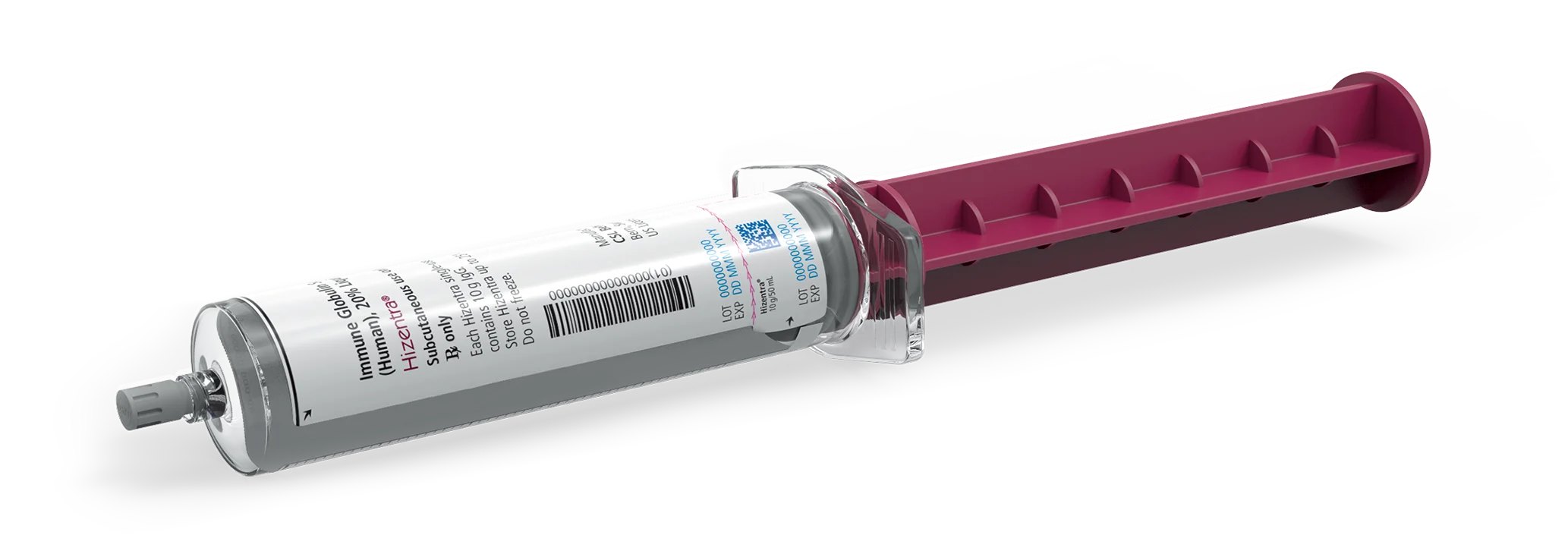
Hizentra is the first and only SCIg prefilled syringe approved for in-home administration
Hizentra is a 20% Ig replacement product specifically formulated for lower-volume subcutaneous administration compared with 10% and 16% Ig products.2
Hizentra prefilled syringes may simplify setup and administration for patients who have difficulty drawing from vials. A simplified setup may be an important consideration for patients or busy parents/caregivers providing administration.3 With Hizentra Connect℠, patients can also receive administration training from a nurse.
for PI1
Why Choose Hizentra?
efficacy4
Hizentra provided continuous protection, evaluated in 7 major studies.
Hizentra maintains steady-state Ig levels without the high Ig peaks or low Ig troughs associated with IVIg.
administration
Hizentra offers streamlined administration with prefilled syringes and room temperature storage, as well as nurse training to ensure patient confidence in self-administration.
16+ years
A long legacy of clinical use with established tolerability.2,6
Hizentra has an established history of clinical use and trusted PI treatment experience since 2010.
19 MILLION+ DOSES
More than 19 million doses* delivered worldwide.1
*Estimated doses based on grams of Hizentra sold worldwide from 2010 through June 2026.
†As of July 2025. Prior authorization or step therapy may be required.
‡Subject to terms and conditions of the Copay Support Program, available here.
How is Hizentra convenient for patients on the go?
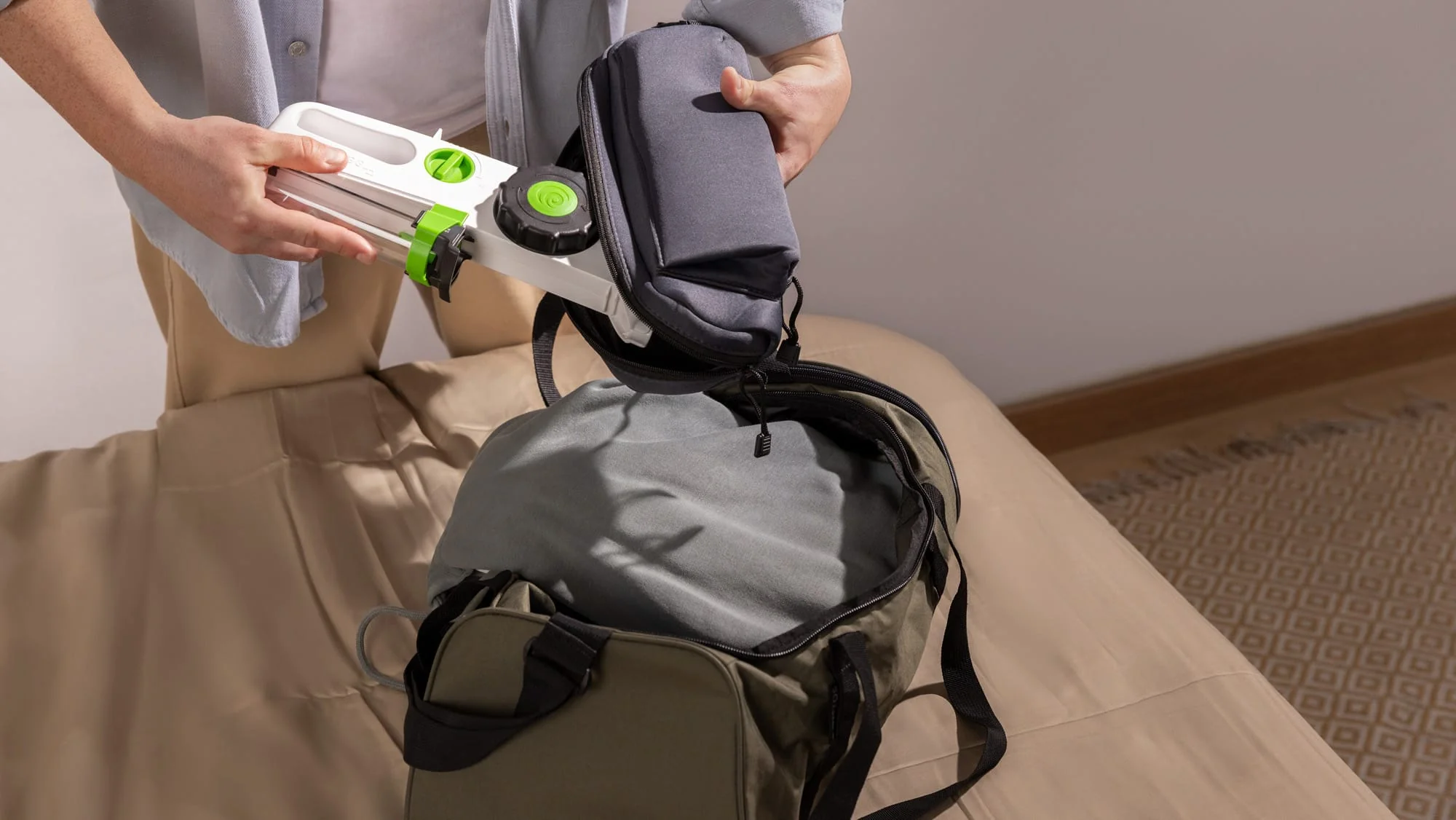
Hizentra is the only SCIg product that can be stored at room temperature (up to 25°C [77°F]) for up to 30 months.8§ This means patients can use Hizentra prefilled syringes at home or without the requirement for refrigeration while traveling.¶
§Up to the expiration date printed on the outer carton of the prefilled syringe label.
¶After adequate training provided by a healthcare provider for self-administration.
Abbreviation: Ig, immunoglobulin; IVIg, intravenous immunoglobulin; PI, primary immunodeficiency; SCIg, subcutaneous immunoglobulin.
References: 1. Data on File. Available from CSL Behring as DOF HIZ-005. 2. Hagan JB, Fasano MB, Spector S, et al. J Clin Immunol. 2010;30(5):734-745. doi:10.1007/s10875-010-9423-4 3. Kafal AR, Vinh DC, Langelier MJ. Expert Opin Drug Deliv. 2018;15(12):1199-1209. doi:10.1080/17425247.2018.1546692 4. Jolles S, Rojavin MA, Lawo JP, et al. J Clin Immunol. 2018;38(8):864-875. doi:10.1007/s10875-018-0560-5 5. Wasserman RL, Melamed I, Nelson RP Jr, et al. Clin Pharmacokinet. 2011;50(6):405-414. doi:10.2165/11587030-000000000-00000 6. Jolles S, Borte M, Nelson RP Jr, et al. Clin Immunol. 2014;150(2):161-169. doi:10.1016/j.clim.2013.10.008 7. Data on File. Available from CSL Behring as DOF HIZ-015. 8. Data on File. Available from CSL Behring as DOF HIZ-020
IMPORTANT SAFETY INFORMATION
WARNING: Thrombosis may occur with immune globulin products, including Hizentra. Risk factors may include: advanced age, prolonged immobilization, hypercoagulable conditions, history of venous or arterial thrombosis, use of estrogens, indwelling vascular catheters, hyperviscosity, and cardiovascular risk factors.
For patients at risk of thrombosis, administer Hizentra at the minimum dose and infusion rate practicable. Ensure adequate hydration in patients before administration. Monitor for signs and symptoms of thrombosis and assess blood viscosity in patients at risk for hyperviscosity.
Hizentra is contraindicated in patients with a history of anaphylactic or severe systemic reaction to human immune globulin (Ig) or components of Hizentra (eg, polysorbate 80), as well as in patients with immunoglobulin A deficiency with antibodies against IgA and a history of hypersensitivity. Because Hizentra contains L-proline as stabilizer, use in patients with hyperprolinemia is contraindicated.
IgA-deficient patients with anti-IgA antibodies are at greater risk of severe hypersensitivity and anaphylactic reactions. Thrombosis may occur following treatment with Ig products, including Hizentra.
Monitor patients for aseptic meningitis syndrome (AMS), which may occur following treatment with Ig products, including Hizentra. In patients at risk of acute renal failure, monitor renal function, including blood urea nitrogen, serum creatinine and urine output. In addition, monitor patients for clinical signs of hemolysis or pulmonary adverse reactions (eg, transfusion-related acute lung injury [TRALI]).
Hizentra is derived from human blood. The risk of transmission of infectious agents, including viruses and, theoretically, the Creutzfeldt-Jakob disease (CJD) agent and its variant (vCJD), cannot be completely eliminated.
The most common adverse reactions (observed in ≥5% of study subjects) were local infusion-site reactions, as well as headache, diarrhea, fatigue, back pain, nausea, extremity pain, cough, upper respiratory tract infection, rash, pruritus, vomiting, upper abdominal pain, migraine, arthralgia, pain, fall, and nasopharyngitis.
The passive transfer of antibodies can interfere with response to live virus vaccines and lead to misinterpretation of serologic test results.
Indications
Hizentra®, Immune Globulin Subcutaneous (Human), 20% Liquid, is indicated for:
- Treatment of primary immunodeficiency (PI) in adults and pediatric patients 2 years and older.
- Maintenance therapy in adults with chronic inflammatory demyelinating polyneuropathy (CIDP) to prevent relapse of neuromuscular disability and impairment.
- Limitation of Use: Maintenance therapy in CIDP has been systematically studied for 6 months and for a further 12 months in a follow-up study. Continued maintenance beyond these periods should be individualized based on patient response and need for continued therapy.
For subcutaneous infusion only.
Please see full Prescribing Information for Hizentra including boxed warning.
To report SUSPECTED ADVERSE REACTIONS, contact the CSL Behring Pharmacovigilance Department at 1-866-915-6958 or FDA at 1-800-FDA-1088 or www.fda.gov/medwatch.

Hizentra is manufactured by CSL Behring AG and distributed by CSL Behring LLC.
Hizentra® is a registered trademark of CSL Behring AG.
Hizentra Connect℠ is a service mark of CSL Behring LLC.